Fuses are used to protect your whole system, not just the controller, and should be used in both mains (AC) and battery (DC) powered systems. The fuse will blow if an electrical overload or short circuit has occurred, protecting the system from damage.
Not fitting a fuse can cause damage to the controller and the system. This could even result in a fire. Should damage occur to the controller from not fitting a fuse, the warranty will be invalid and any repair will be charged.
The advised fuse rating should never be exceeded. This rating can be found in the table below or on the manual provided with the controller. Digital copies of the manual and the video manuals can be found on our website, along with videos showing how to fit a fuse correctly.
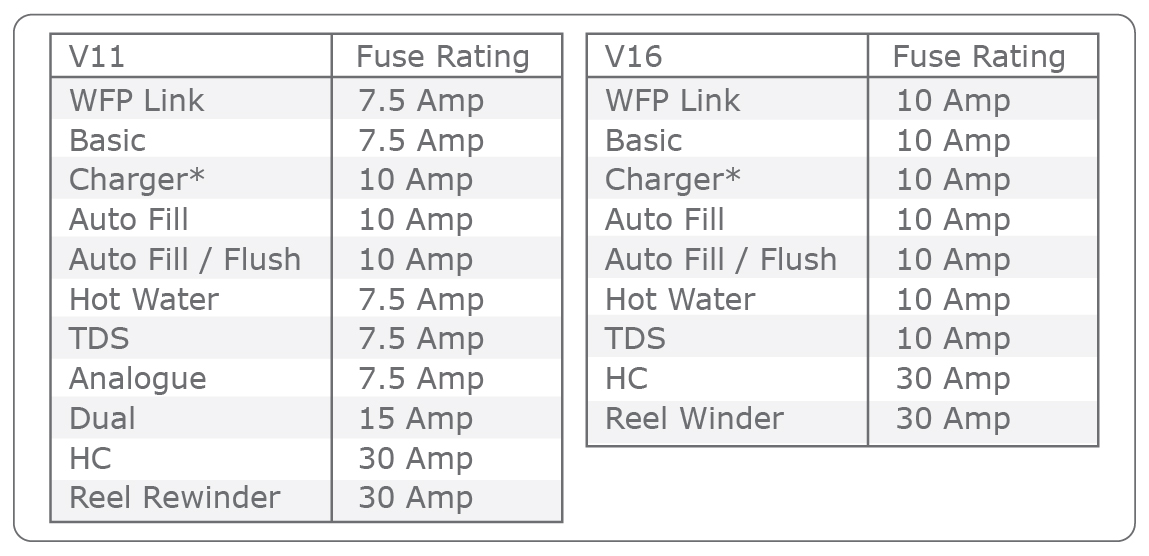
*Charger controllers should be fused at the positive terminal of both the car and the leisure battery.
The fuse should be placed as close to the power source (battery) as possible. This will protect the wiring as well as the controller and the pump. This will reduce the risk of the wire overheating should there be an electrical fault.
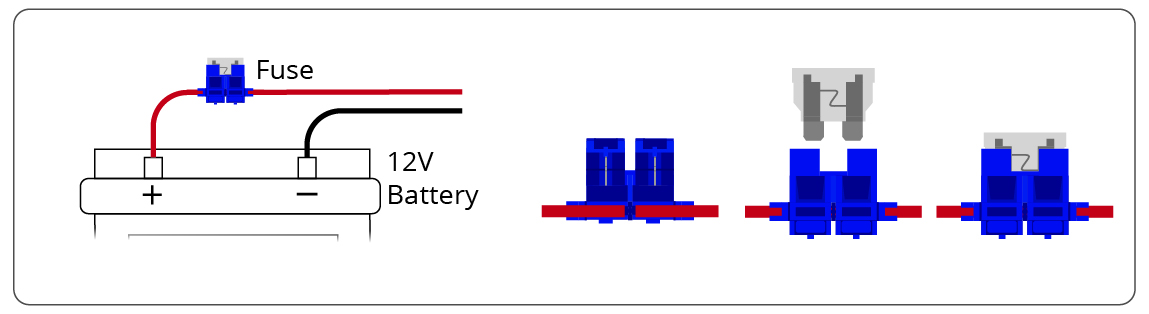
To fit the fuse holder (when using a 12V battery) cut the red wire and feed each end into the holder, tightly close the holder with a pair of pliers, then fit the fuse into the holder. Fuses should only be fitted once all connections are made.